The short version
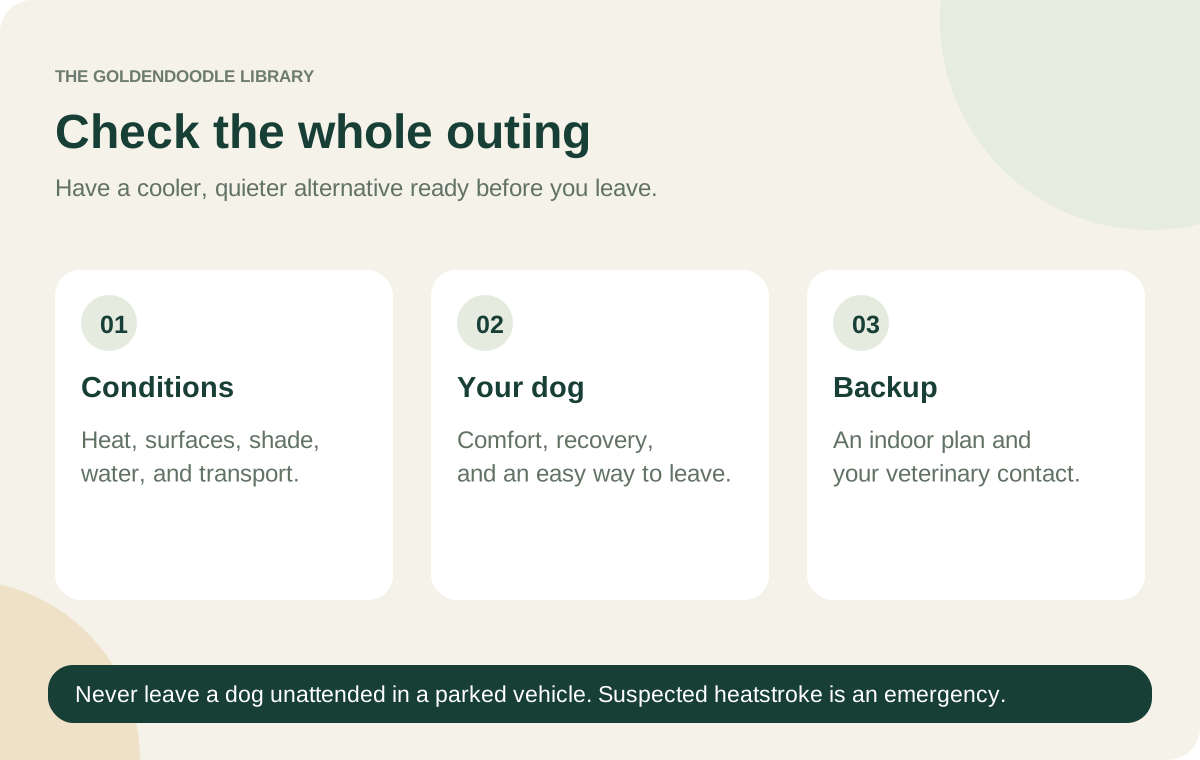
Three things to keep in mind.
- 01
Choose cooler conditions and avoid hot surfaces.
- 02
Bring water and an easy way to leave.
- 03
Never leave a dog unattended in a parked car.
What to remember
Your useful takeaways.
- Choose cooler conditions, provide water and shade, and avoid hot surfaces.
- Never leave a dog unattended in a parked vehicle.
- Know your veterinary contact and emergency route before traveling.
- Treat suspected heatstroke as an emergency, not a wait-and-see situation.
A little more detail
Explore the questions that matter to you.
Open a section when you want the why behind the short answer.
01Check the whole outing, not just the forecast
AVMA recommends planning activity for cooler times, avoiding hot surfaces, taking breaks, and providing water and shade. Never leave a pet in a parked car, including with windows partly open. Ask your veterinarian about exercise and heat risk for your individual dog, especially if health or body condition is a concern.
Consider what will happen at the destination. A shaded start may lead to an exposed return route, and an appointment afterward may leave you without a comfortable place for the dog. If the complete plan cannot keep the dog safe, make a different plan rather than trying to solve those problems once you are already away from home.
References: [1]
02Know when the plan must stop
Cornell describes heatstroke as a potentially life-threatening emergency. Heavy panting, seeking shade, reluctance to continue, and drooling may signal overheating. Weakness, confusion, collapse, difficulty breathing, vomiting, or other worsening signs require urgent veterinary attention. Move out of the heat and contact veterinary care immediately rather than waiting to see whether the outing can continue.
Move the dog into cool air or air conditioning and begin cooling with cool water and airflow while arranging veterinary advice. Provide access to drinking water without forcing it. Persistent excessive panting or drooling, breathing difficulty, weakness, confusion, seizures, or collapse need immediate veterinary hospital care. Call ahead when possible and continue safe cooling while arranging transport; do not delay urgent care to finish an outing or keep searching online.
References: [2]
03Use a short departure checklist
Build a checklist that fits your household: current conditions, appropriate route, water, bowl, lead, identification, waste bags, charged phone, and a backup return plan. Add any individual instructions from your veterinarian. Decide who is responsible for the dog if several family members are traveling together.
For a new route, look for shade, turnaround options, and places where you can step away from traffic or other dogs. Do not make a destination’s dog-friendly label your only planning criterion. Check current access rules and conditions directly with the location before departure, since policies, closures, and seasonal restrictions can change.
04Keep an indoor version of the day ready
Make a short list of quieter alternatives you can use when conditions are unsuitable: brief learning practice, supervised easy enrichment, or calm time with a caregiver. Plan toilet access separately so canceling a long outing does not leave the household improvising every other part of the routine.
After an outing, note what worked and what you would change. Was the return more exposed than expected? Was the planned activity too difficult to shorten? Did your supplies fit comfortably into the route? These observations help you choose better next time. A flexible plan supports a dog’s long-term wellbeing more reliably than completing an outing simply because it was scheduled.
Sources & further reading
References supporting this guide; inclusion does not imply endorsement of our program.
For an individual dog’s health or behavior, consult your veterinarian or qualified trainer. For access or funding questions, check current official guidance.
A personal next step
Talk it through with Blaine.
Ask about a planned pairing, puppy matching, or preparing for home.