The short version
Three things to keep in mind.
- 01
Learn how to brush and comb this coat.
- 02
Reward small, comfortable handling steps.
- 03
Let a professional handle painful matting.
What to remember
Your useful takeaways.
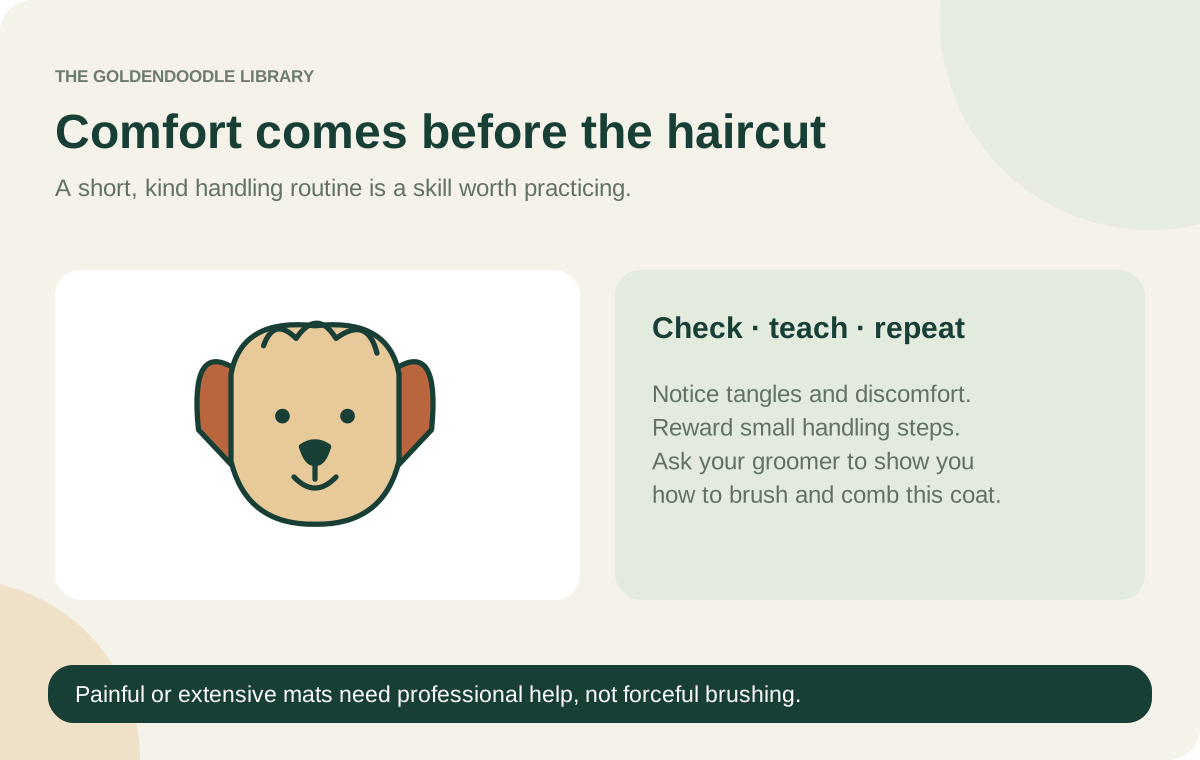
- Check the coat regularly, especially areas where hair rubs and tangles.
- Ask for a hands-on brushing and combing demonstration.
- Introduce handling in small, rewarded steps.
- Have painful or extensive mats handled professionally.
A little more detail
Explore the questions that matter to you.
Open a section when you want the why behind the short answer.
01Plan around the coat in front of you
VCA notes that long or curly coats may need daily attention to prevent tangling, particularly behind ears, in armpits, and around the backs of legs. Gentle inspection matters as much as making the visible top layer look tidy. Ask a professional how to check through the coat without scraping skin or pulling the dog’s hair.
When coat texture or density changes as a puppy grows, revisit the routine with your groomer instead of assuming the early puppy schedule will remain suitable. Ask which areas you are missing and whether a shorter style would be easier to maintain. An individual coat assessment is more useful than a promise attached to F1B or another label.
References: [1]
02Teach handling separately from finishing a haircut
VCA recommends handling exercises that help a puppy become comfortable with necessary care. Use a secure, non-slip surface and start with small interactions the puppy can manage. A brief touch paired with a reward is a different exercise from restraining a puppy through a complete brushing session.
Your practice plan might begin with approaching the grooming station, then seeing a tool, then a gentle touch in an easy area. Keep steps small and ask your groomer or trainer to demonstrate what comfortable participation looks like. If handling becomes difficult, check for pain or a grooming problem rather than interpreting every response as stubbornness.
References: [2]
03Make the maintenance plan easy to follow
Create a short coat-care card with your groomer. Include the tools they demonstrated, the order of areas you will check, what you can reasonably do at home, and when to contact them. Keep it with your grooming supplies so another caregiver can follow the same plan.
Review lifestyle changes at appointments. A dog who swims, walks through vegetation, or wears equipment may need a different practical routine from one whose week is mostly indoors. Record where tangles recur and ask for an adjustment. Useful grooming planning is specific: “we miss the harness area” gives a professional something more actionable than “the coat is difficult.”
04Choose comfort when mats are already present
Extensive or tight mats are a reason to contact a professional, not to increase force with a brush or attempt to cut into the coat at home. VCA’s matting guidance explains that mats can hide irritated skin and make drying difficult. If the dog seems painful or the skin looks irritated, involve your veterinarian. Do not rely on a bath to solve a tangled coat.
Ask for a realistic reset plan rather than insisting on preserving every inch of hair. A comfortable dog and a manageable routine are the priorities. After professional care, agree on what you will do between appointments and arrange a check-in if the same problem returns. The point is to make care sustainable, not to blame the dog or the caregiver.
References: [3]
Sources & further reading
References supporting this guide; inclusion does not imply endorsement of our program.
- VCA: Grooming and Coat Care for Your Dog ↗
- VCA: Puppy Behavior and Training — Handling and Food Bowl Exercises ↗
- VCA Animal Wellness Center: How to Prevent Matting ↗
For an individual dog’s health or behavior, consult your veterinarian or qualified trainer. For access or funding questions, check current official guidance.
A personal next step
Talk it through with Blaine.
Ask about a planned pairing, puppy matching, or preparing for home.