The short version
Three things to keep in mind.
- 01
Learn your dog’s usual appearance and comfort.
- 02
Write down when the change started.
- 03
Call for pain, persistent signs, or balance changes.
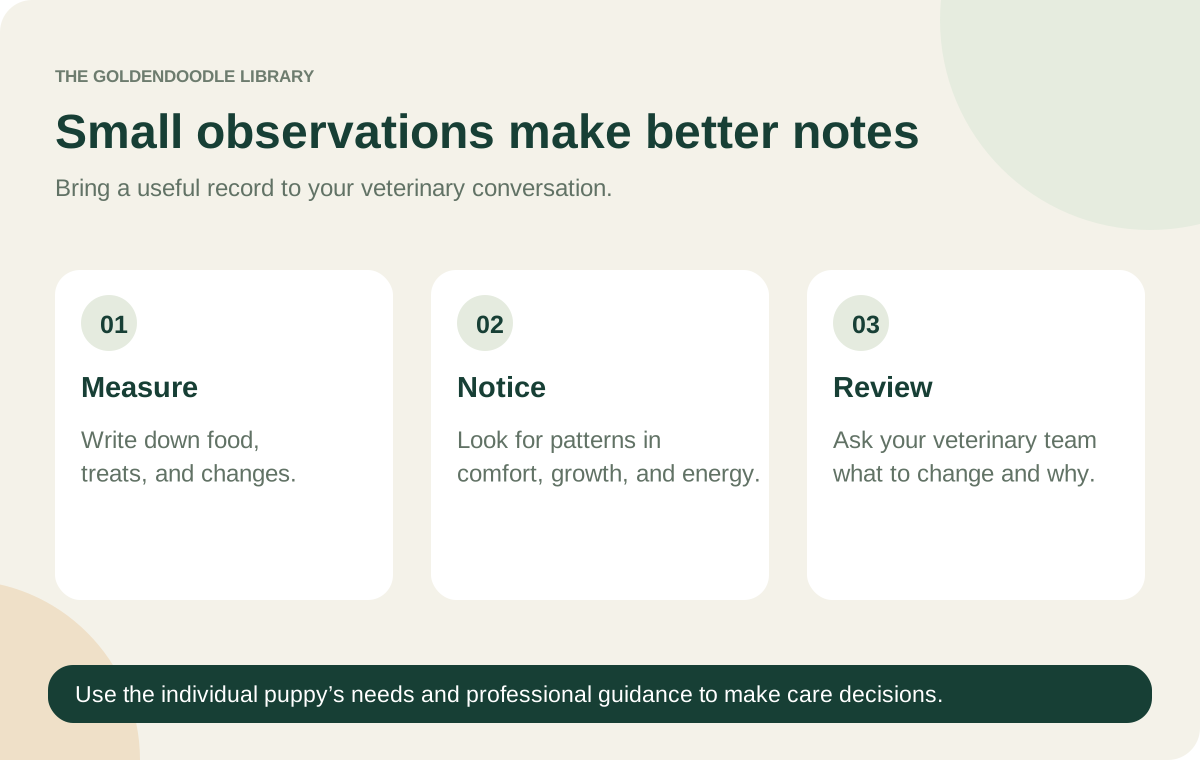
What to remember
Your useful takeaways.
- Learn your dog’s usual appearance and comfort during gentle checks.
- Ask your veterinarian whether and how routine ear cleaning is appropriate.
- Do not put home remedies or leftover medication into an uncomfortable ear.
- Seek veterinary help for pain, persistent scratching, discharge, or concerning changes.
A little more detail
Explore the questions that matter to you.
Open a section when you want the why behind the short answer.
01Recognize a change without guessing its cause
Veterinary guidance describes redness, itching, head shaking, odor, discharge, and discomfort as changes worth discussing with the veterinary team. Several problems can create similar signs, so appearance alone does not establish the cause. Note what changed and whether one ear or both seems affected; do not repeatedly manipulate a painful area to gather more detail.
Ask your veterinarian to show you what a comfortable routine check looks like for your dog. If the dog is healthy and relaxed, noticing the usual appearance gives you a comparison later. If a previously comfortable dog begins avoiding touch, that change itself is useful information and deserves attention rather than a more forceful examination.
References: [3]
02Let the veterinary team choose the cleaning plan
Cornell explains that cleaning frequency depends on the individual ear and the reason for cleaning; unnecessary cleaning can also irritate. Different situations may require different products. Avoid improvising with alcohol, peroxide, essential oils, or other home remedies. A professional should explain the appropriate product, technique, and follow-up for your dog.
Make the instructions concrete before you leave the appointment: which ear, which product, what amount or method the veterinarian intends, how often, what response is expected, and which signs mean you should stop and call. Keep this individual plan with the dog’s records instead of substituting a generic internet schedule.
References: [1]
03Bring observations that help the appointment
Prepare a simple timeline. Record when you first noticed the issue, changes in bathing or swimming, recent grooming, products used, and whether the dog seems uncomfortable with normal activities. If a visible skin change can be photographed without distressing the dog, a dated image may help explain progression to the veterinary team.
List medications and products accurately, including leftovers you were considering using. Do not hide an attempted home treatment because you feel embarrassed; the information may matter. Ask the clinic whether they want you to avoid cleaning before the appointment so they can examine the ear or collect a sample as intended.
04Act promptly when discomfort or balance changes occur
Cornell describes ear problems as potentially painful and notes that head tilt, abnormal balance, severe discomfort, swelling, or self-injury can need prompt veterinary attention. Call your veterinary team or an emergency service for triage rather than deciding from an online photograph that the problem can wait.
For ongoing or recurring problems, ask about the underlying cause and the longer-term follow-up plan. Repeatedly treating the visible debris without understanding why it returns may leave important issues unaddressed. A useful goal is a comfortable dog and a clear care plan, with the veterinary team deciding what testing or treatment is appropriate.
References: [2]
Sources & further reading
References supporting this guide; inclusion does not imply endorsement of our program.
- Cornell: How to Clean Your Dog’s Ears ↗
- Cornell: Itchy ear problems ↗
- VCA: Dog Behavior and Training — Cleaning Ears ↗
For an individual dog’s health or behavior, consult your veterinarian or qualified trainer. For access or funding questions, check current official guidance.
A personal next step
Talk it through with Blaine.
Ask about a planned pairing, puppy matching, or preparing for home.