
The short version
Three things to keep in mind.
- 01
Name the adult responsible for supervision.
- 02
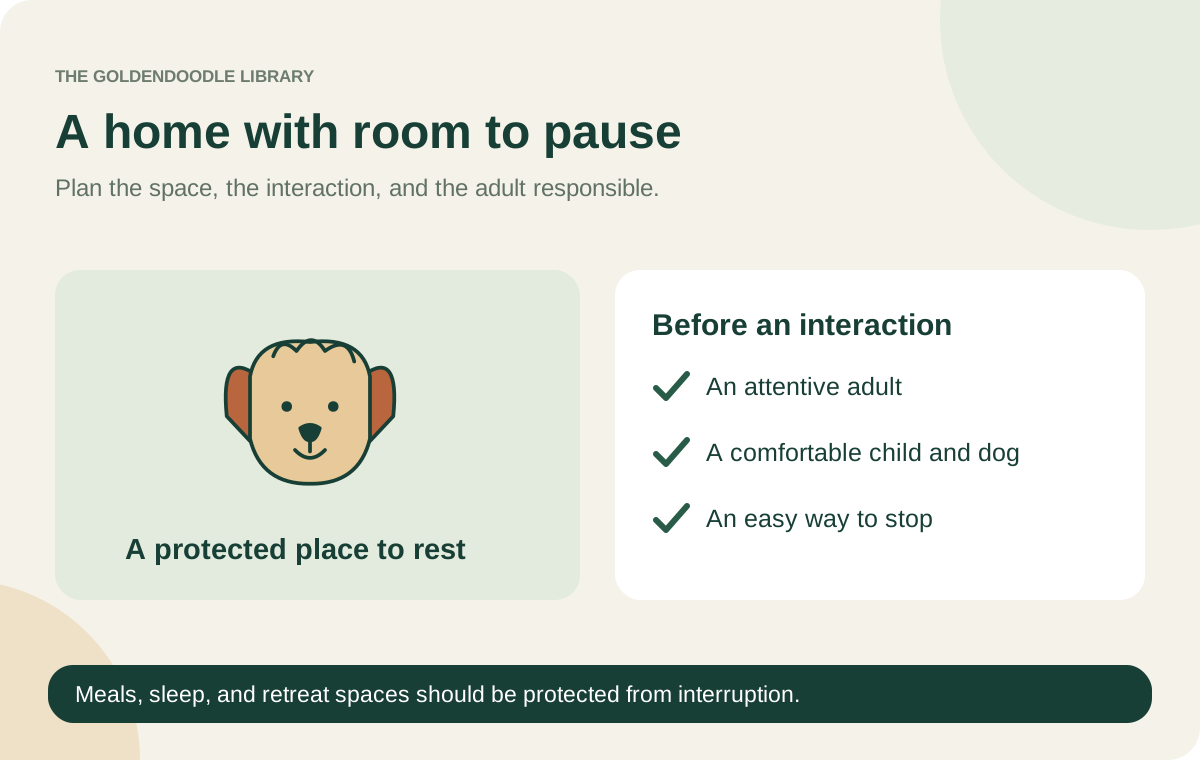
Protect the dog’s quiet retreat.
- 03
Assign care tasks and a backup caregiver.
What to remember
Your useful takeaways.
- An adult should hold the responsibility for supervision and the care plan.
- Respect the person’s comfort and the dog’s need for rest and space.
- Use clear household roles rather than assuming everyone will help.
- Include a backup caregiver and a realistic budget before choosing a puppy.
A little more detail
Explore the questions that matter to you.
Open a section when you want the why behind the short answer.
01Decide who is actively supervising
CDC advises supervision of young children around dogs, including familiar family pets. It notes that any dog can bite and that routine interactions can be part of that risk. A family should not treat a friendly breed reputation or service-minded pedigree as a substitute for supervision.
Describe what active supervision looks like in your home. Name the adult who is watching, identify when the adult must attend to something else, and decide how the dog and child will be separated comfortably at those times. Simply being somewhere in the same house is not the same as being available to notice and respond to an interaction.
References: [1]
02Give both partners a genuine choice
Plan quiet areas where the dog can rest without being followed or handled. Teach the household to avoid interrupting sleep or meals and to make calm, supported introductions. CDC’s bite-prevention guidance specifically cautions against disturbing dogs while they are sleeping or eating.
Consider the intended partner’s sensory and communication preferences. A child may enjoy watching a dog but dislike licking, barking, or close contact. Respect that response. The goal is not to make the child perform affection or the dog tolerate uncomfortable handling; it is to find interactions that are welcome and manageable for both. Ask a qualified professional to help interpret difficulty rather than forcing repeated exposure.
References: [1]
03Make the invisible work visible
List feeding, toileting, walks, training practice, grooming, cleaning, veterinary appointments, and transport. Put a person’s name beside each responsibility and decide what happens when that person is ill or away. A service-dog goal should not leave routine animal care dependent on a child’s ability to manage a difficult day.
Discuss the ongoing cost and time of coat care, routine veterinary care, appropriate equipment, and professional help. Separate predictable expenses from contingency funds. You do not need a perfect forecast, but you do need a shared understanding that puppy purchase and initial training are only parts of the commitment.
04Build a one-page family readiness plan
Write down the household’s daily rhythm, quiet spaces, handling roles, care responsibilities, backup arrangements, and the intended partner’s preferences. Include the professionals you would contact for health or behavior concerns. Bring the plan to a breeder and trainer so matching is informed by the home the dog will actually join.
Review it after the dog arrives and as routines change. School schedules, caregiver availability, health needs, and the dog’s own development may all require adjustments. Treat the plan as a living agreement rather than a test to pass once. Being willing to change the setup is part of protecting a lasting relationship.
- Who actively supervises each child–dog interaction?
- Where can the dog rest undisturbed?
- How will the person indicate that they want more space?
- Who covers grooming, training, transport, and veterinary care?
- Which adult takes over if the usual caregiver is unavailable?
- What signs would prompt a professional review of the arrangement?
Sources & further reading
References supporting this guide; inclusion does not imply endorsement of our program.
For an individual dog’s health or behavior, consult your veterinarian or qualified trainer. For access or funding questions, check current official guidance.
A personal next step
Talk it through with Blaine.
Ask about a planned pairing, puppy matching, or preparing for home.