
The short version
Three things to keep in mind.
- 01
Check current guidance for the exact setting.
- 02
Keep registries and vests separate from legal status.
- 03
Plan control, rest, care, and a safe exit.
What to remember
Your useful takeaways.
- ADA public-access rules apply to trained service dogs, with specific responsibilities and exceptions.
- The ADA does not require a vest, online registry, or service-dog certificate.
- Dogs still in training require a separate check of applicable state or local law.
- Housing and air travel need their own current guidance and preparation.
A little more detail
Explore the questions that matter to you.
Open a section when you want the why behind the short answer.
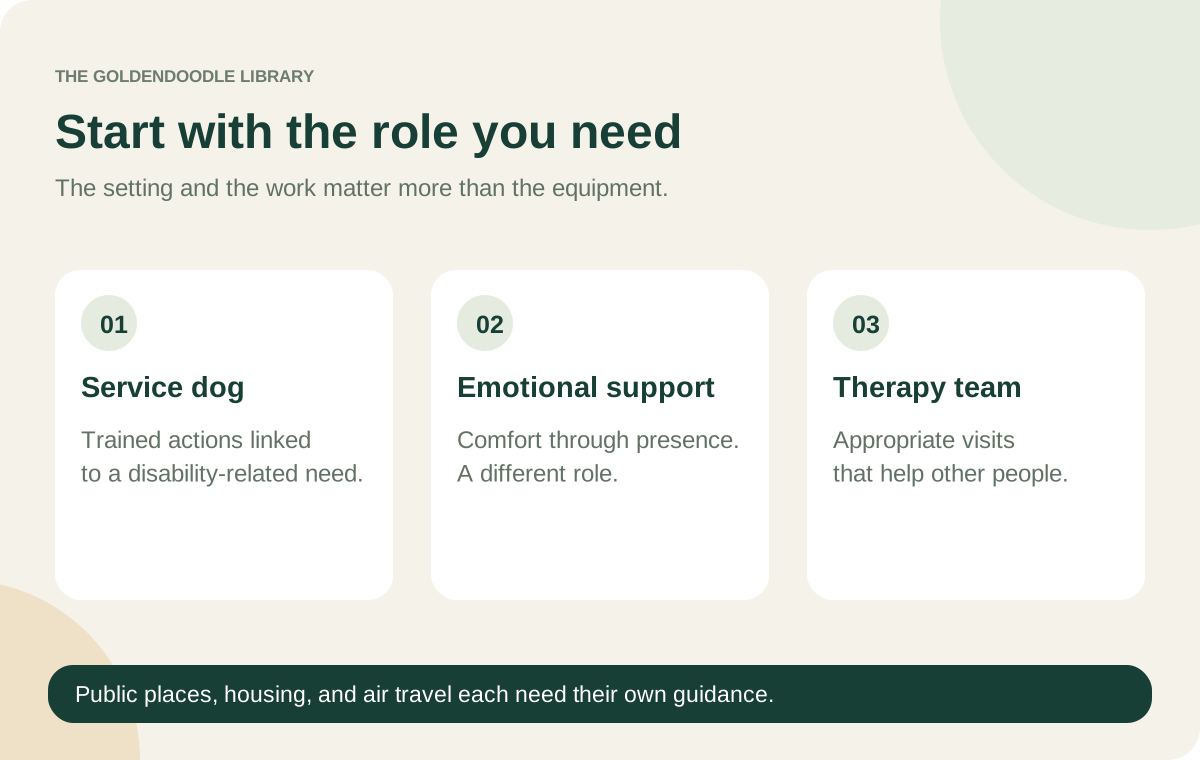
01Start with the ADA rules for public places
Covered public businesses and state or local government services generally must allow a trained service dog to accompany a person with a disability where the public may go. When the role is not obvious, staff may ask whether the dog is required because of a disability and what disability-related work or task it has been trained to perform. They may not demand a task demonstration or inquire into the person’s diagnosis.
The handler remains responsible for care and control. A dog generally must be leashed, harnessed, or tethered unless that interferes with the work or the disability prevents it; effective alternative control is still required. A dog that is not housebroken, or is out of control without effective corrective action, may be required to leave. Read the official requirements for the full context and other exceptions.
References: [1]
02Paperwork is not a public-access shortcut
DOJ explains that the ADA does not require a vest, identification card, or registry. It also distinguishes trained service dogs from dogs still in training; the ADA itself does not grant the latter general public-access rights. State or local rules may differ, so check the law where training will occur.
Discuss a realistic outing plan with the trainer before introducing busy environments. Keep sessions matched to the dog’s actual skills, plan an exit, and avoid using a family event as a test the dog cannot leave. When the dog is not ready for a setting, arrange another support rather than treating access as the next training exercise by default.
The ADA does not require completion of a professional service-dog training program; people with disabilities may train their own service dogs. Professional assessment can still help a family plan and evaluate a prospect. The relevant question for ADA public access is whether the dog meets the trained service-animal requirements, not who issued a training certificate.
References: [2]
03Plan housing and flights separately
For flights covered by the Air Carrier Access Act, consult DOT and the airline in advance. DOT recognizes individually task-trained dogs, not emotional support animals or service dogs still in training, within its service-animal category. Airlines may require the permitted DOT forms, and seating, behavior, health, and destination requirements also matter.
Housing accommodations involve a different framework. Consult current HUD information, the housing provider’s process, and qualified fair-housing assistance for an individual situation. Do not transfer a rule about store entry directly to a lease, and do not assume an older assistance-animal summary reflects every current policy or local requirement.
04Prepare the everyday logistics
Write an outing checklist before the first important appointment. Include the destination, transport, toilet opportunities, rest, water, the task likely to be needed, and who can help if the team needs to leave. Keep a backup plan for times when the dog is unwell, tired, or unable to work.
Practice how you will explain the dog’s trained role in a brief, factual way, without sharing medical details you do not want to disclose. Keep relevant official guidance bookmarked. If an access issue occurs, make a calm record of the setting and what happened and seek appropriate assistance afterward. The immediate goal is the person’s safety and access to the service, not winning a confrontation in the doorway.
- Identify the legal framework for this specific setting.
- Confirm the dog’s readiness with the training professional.
- Plan care, control, rest, and a safe exit.
- Keep essential human supports available when the dog cannot work.
Sources & further reading
References supporting this guide; inclusion does not imply endorsement of our program.
- U.S. Department of Justice: ADA Service Animal Requirements ↗
- U.S. Department of Justice: Service Animal FAQs ↗
- U.S. Department of Transportation: Service Animals and Air Travel ↗
- HUD: Assistance Animals and Housing Accommodation ↗
For an individual dog’s health or behavior, consult your veterinarian or qualified trainer. For access or funding questions, check current official guidance.
A personal next step
Talk it through with Blaine.
Ask about a planned pairing, puppy matching, or preparing for home.